
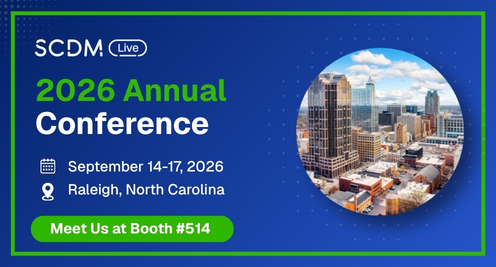
September 14–17, 2026
SCDM Annual Conference 2026 — Raleigh
Advancing Clinical Data Management through AI-guided, human-supervised execution. Visit Booth #514.
View event detailsMaxis AI launches MaxisAI Holarchy, the first Verticalized Context Layer for life sciences.Learn More →
Maxis AI delivers Agentic AI in Life Sciences through the industry's first AI Workforce for Clinical Trials. Built for sponsors, CRO delivery teams, and site networks, it enables governed clinical execution through reasoning, supervised execution, and human oversight across regulated clinical research workflows. Explore the model in our complete guide to AI agents in clinical trials.
Maxis AI delivers Agentic AI in Life Sciences through the industry's first AI Workforce for Clinical Trials. Built for sponsors, CROs, and site networks, it enables governed clinical execution through reasoning, supervised execution, and human oversight across regulated clinical research workflows.TRUSTED ACROSS SPONSORS, CROS & SITE NETWORKS











Years industry experience
CLINICAL TRIALS
Domain & AI experts
Pharma/LS focus
Renewal rate
AI agents
Orchestrations
System integrations
Agentic AI in Life Sciences refers to AI systems capable of observing, reasoning, planning, and executing regulated clinical workflows while operating within governance, auditability, and human oversight.
An AI Workforce is a coordinated team of governed AI agents that work alongside clinical teams to execute operational workflows across study startup, data management, safety, regulatory submissions, and quality.
Most clinical platforms improve visibility. Few increase execution capacity across regulated operations. Clinical teams don't struggle to see risk anymore. They struggle to resolve it at scale. Digital platforms improved monitoring. They did not increase throughput. Maxis introduces an AI Workforce that converts signals into governed execution. Read why this clinical trial execution gap now drives cost, timeline, and compliance risk.
Trials with at least one RBM/RBQM component
Execution-stage RBQM adoption
Sources: ACRO RBQM Summary Report; Applied Clinical Trials — Industry Assessment of RBQM.
Signals routed into governed workflows
Actions resolved or escalated within SLA
Clinical development teams manage increasing protocol complexity, growing data volumes, expanding regulatory expectations, and limited operational capacity. Agentic AI in Clinical Research helps scale execution without proportionally increasing headcount.
“Indicators are drawn from Tufts CSDD, CTTI, ACRO, and clinical research site workforce surveys. They represent related pressure signals, not a single composite index.”
Supervised
Core
Build your own AI Workforce. Explore our latest stack of AI Agents and Integrations.
Across the workflows that bottleneck most studies, supervised execution compresses the cycle without removing oversight. Routine execution moves faster, while teams stay focused on scientific and operational decisions that require human judgment.
EDC · CTMS · eTMF · safety · imaging
Supervised agents executing defined steps
Validation & approval checkpoints
Every agent step visible in real time across workflows.
Immutable, timestamped record of every action and decision.
Clear rationale for every output and recommendation.
Identical inputs produce identical, verifiable results.
A single, supervised execution loop — visible end to end.
Monitor clinical systems, ingest data from protocols, queries, safety, documents and sites.
Identify patterns, flag risks, draft outputs within approved workflow logic.
Perform approved actions across defined workflows, under supervision.
Human reviewers retain approval authority where required.
Every action documented with context and traceability.
Exceptions are routed to the right human or function.
Sponsors
Sponsor programs supported
CROs
CRO partner workflows
Site Networks
Sites in active operations
Maxis AI operates within the standards regulated clinical environments require — independently audited, fully traceable across every framework that matters.
Certified quality management system
Information security management standard
Audited security, availability & confidentiality
European data privacy & protection compliance
Good Practice frameworks across clinical ops
Electronic records & electronic signatures
Quality System Regulation for medical software
International clinical research standards
EU GMP guidance for computerised systems
The execution model is governed by design — not bolted on after.
Granular permissions across teams and workflows
At-rest and in-transit encryption end-to-end
Every action recorded with full context
Reviewable activity history on demand
Faster feasibility cycle
Faster query resolution
Faster narrative drafting
Faster CAPA cycle
Faster eTMF QC
Faster activation
Six purpose-built layers — scroll to see each one stack into place, from the agents you interact with down to the compliance foundation governing every action.
Purpose-built AI companions for specific clinical programming tasks.
Core Components
Manages multi-agent workflows, task routing, and human-in-the-loop handoffs.
Core Components
Injects study-specific metadata, sponsor standards, and historical assets into prompts.
Core Components
Enterprise-grade LLMs fine-tuned for clinical data and SAS/R programming.
Core Components
Secure connectors to clinical data repositories, metadata registries, and SCEs.
Core Components
Deterministic rules engine ensuring 21 CFR Part 11 compliance and zero hallucinations.
Core Components
Real stories from teams who streamlined workflows and delivered more with less.
Clinical trials are the engine of medical progress, but they are still built on slow, manual, and fragmented processes. The Maxis AI project shows that AI can be harnessed responsibly to modernize that engine — and we're just getting started.
Principal Investigator
Clinical Research Network
Principal Investigator — Clinical Research Network: Clinical trials are the engine of medical progress, but they are still built on slow, manual, and fragmented processes. The Maxis AI project shows that AI can be harnessed responsibly to modernize that engine — and we're just getting started.
CEO — Clinical Research Network: Building globally competitive clinical research in Africa requires more than infrastructure — it requires coordinated, scalable execution. Leveraging Maxis AI, we see a clear opportunity to streamline fragmented regulatory processes and accelerate trial starts.
Clinical Research Leader — Clinical Research Organization: Study startup has remained one of the most persistent bottlenecks in clinical trials. The real opportunity now lies in applying intelligent AI-driven workflows to remove operational friction and accelerate the path from protocol to patient.
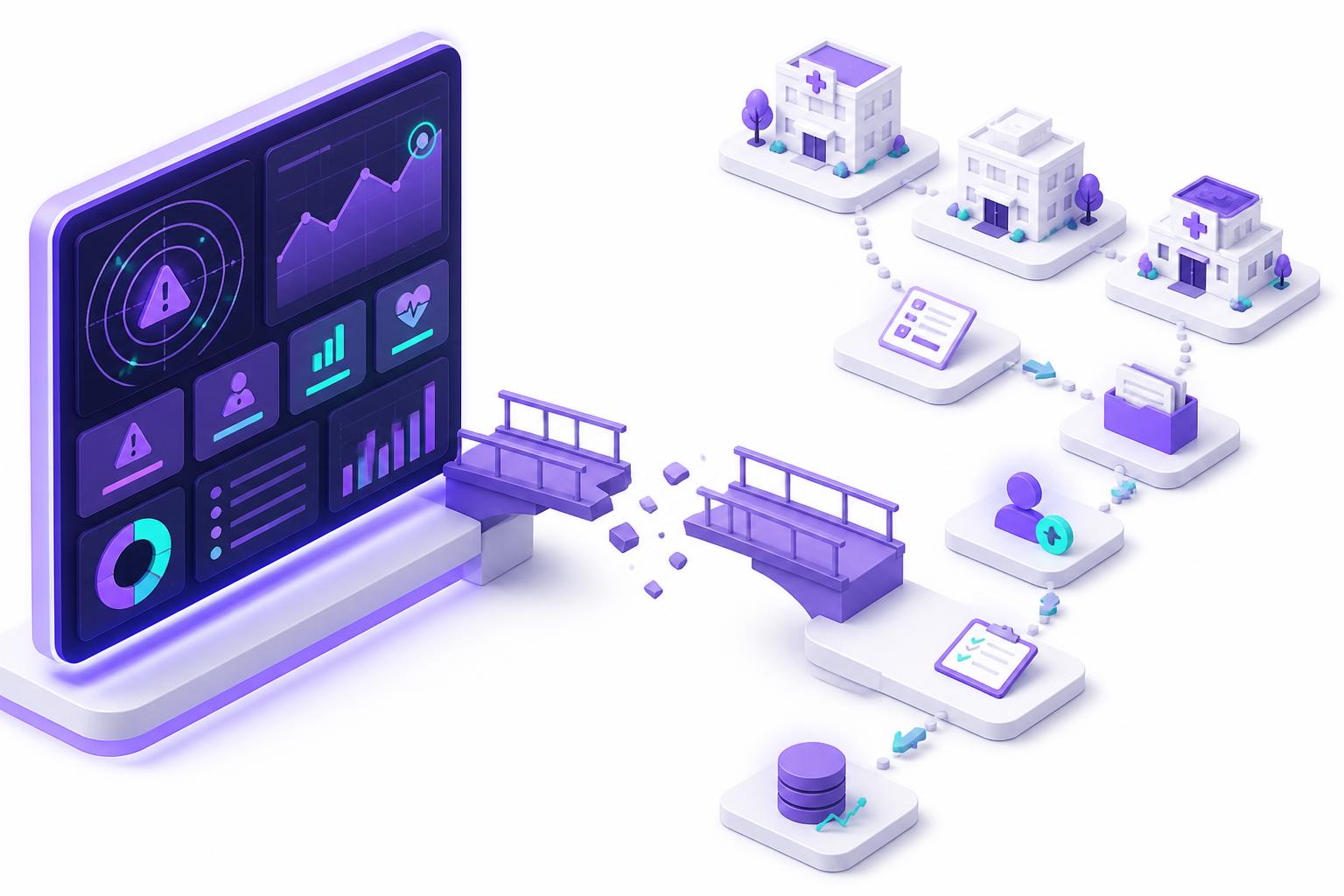
Detection has never been better, yet timelines slip, deviations repeat, and costs compound. Inside the execution translation gap — and the supervised execution layer that closes it.
Read the full story
Controls, audit trails, validation, and reviewer escalation across the agent lifecycle.
Read the full story
Maxis AI helped an oncology biotech accelerate study startup by 45% through one governed Phase 1 execution model - from protocol through database lock.
Read the full storyAdvancing Clinical Data Management through AI-guided, human-supervised execution. Visit Booth #514.
View event details
Maxis AI panel: 'Governed AI in Submissions.'
View event details
Visit us at Booth 312 for live agentic CDM demos.
View event detailsCommon questions about deploying governed agentic AI in regulated clinical environments.
Agentic AI in Life Sciences refers to AI systems that can observe, reason, plan and execute regulated clinical workflows under governance controls and human oversight. Unlike traditional AI that primarily generates insights, Agentic AI completes structured operational work across clinical research, helping organizations increase execution capacity while maintaining compliance, auditability and regulatory readiness.
Maxis AI is the first AI Workforce for Clinical Trials. AI Workforce for Clinical Trials applies Agentic AI in Life Sciences to execute operational work rather than simply reporting on it. Governed AI agents perform structured tasks across study startup, clinical data management, statistical programming, medical writing, safety and quality while working within existing clinical systems and maintaining complete audit traceability.
Clinical trials generate more operational work than teams can manually resolve as studies become increasingly complex. The role of Agentic AI in Life Sciences is to execute structured, repeatable tasks such as query resolution, startup documentation, workflow coordination and medical writing support, enabling organizations to improve execution capacity without proportionally increasing headcount.
Agentic AI in Clinical Research improves trial execution by coordinating structured workflows across study startup, clinical operations, data management, safety, statistical programming and regulatory documentation. Governed AI agents execute approved tasks, escalate exceptions and support clinical teams with supervised execution, helping improve consistency, quality and delivery timelines.
Traditional AI solutions identify risks, generate predictions or surface insights, leaving clinical teams to complete the operational work. Maxis AI introduces an AI Workforce for Clinical Trials that executes approved workflows through governed AI agents. This supervised execution model helps organizations move beyond visibility by increasing operational throughput while maintaining compliance and human oversight.
Agentic AI in Life Sciences is designed for pharmaceutical companies, biotechnology organizations, contract research organizations (CROs), functional service providers and clinical trial site networks. It supports regulated functions including clinical operations, clinical data management, biostatistics, medical writing, safety, regulatory and quality where governance and audit-ready execution are essential.
No. Maxis AI is designed to augment clinical teams rather than replace them. The AI Workforce executes structured operational work within defined workflow boundaries while experts retain control over decisions, approvals and exceptions. Human validation checkpoints, governance policies and audit traceability ensure every workflow remains compliant, transparent and accountable.
Traditional AI helps clinical teams analyze information, generate content, or identify potential risks, but the responsibility for completing operational work still rests with people. An AI Workforce for Clinical Trials extends beyond recommendations by executing structured workflows under human supervision. Governed AI agents coordinate activities across study startup, clinical operations, data management, biometrics, medical writing, and quality while maintaining audit trails, validation checkpoints, and regulatory oversight.
See how AI agents are transforming study startup, data management, oversight, and regulatory submissions.